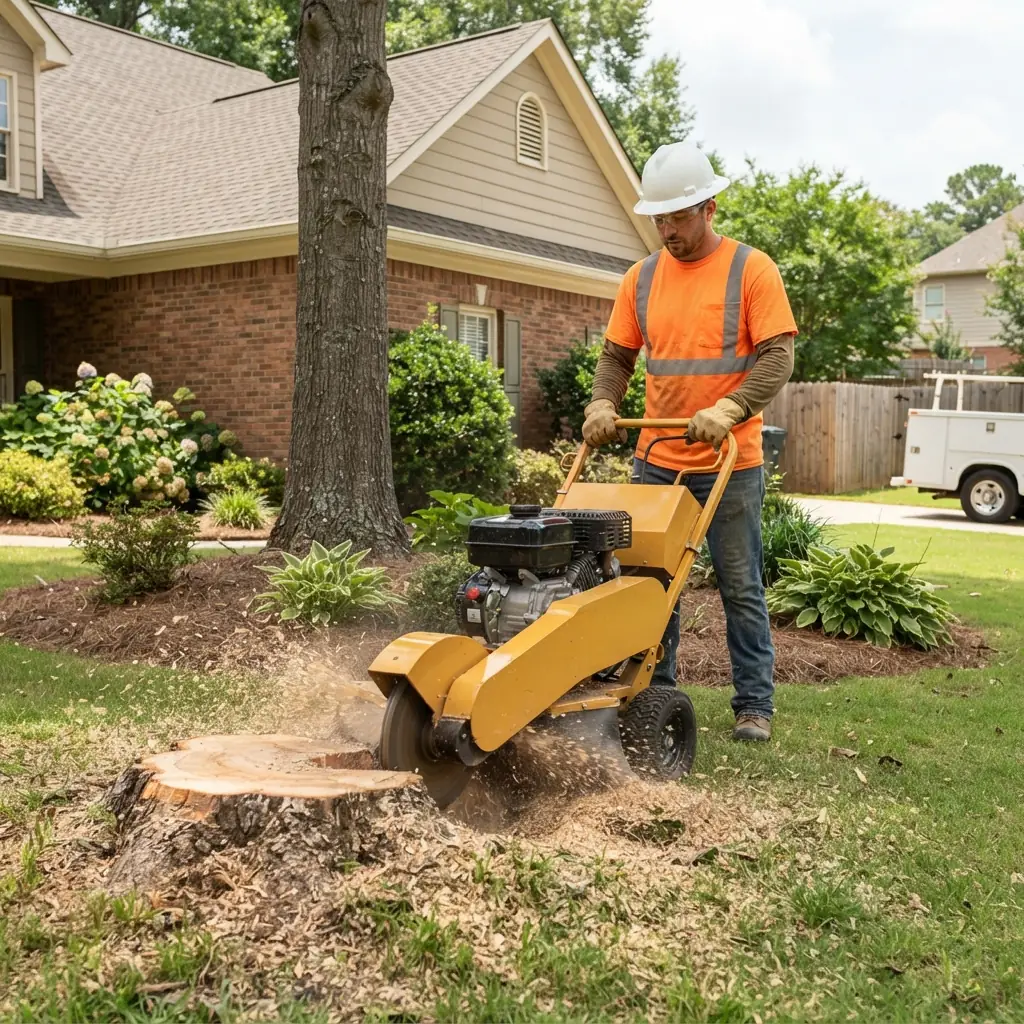
A stump left behind after a removal can trip people, get in the way of mowing and sprout new shoots. Stump grinding takes care of it without digging up the whole area. Here is how the process works and what to expect afterward.
Why Grind a Stump
Stumps are more than an eyesore. They make mowing harder, catch feet and lawn equipment, and some trees push up new sprouts from the roots for years.
Decaying stumps can also attract insects and fungi. Grinding removes the visible stump and the top layer of roots, which lets you replant grass, add a garden bed or extend a patio. It is far less disruptive than pulling the stump out, which can leave a large hole and tear up the surrounding lawn.
How the Grinder Works
A stump grinder uses a spinning wheel fitted with hard teeth. The operator moves the wheel side to side across the stump, chipping away a little wood with each pass and working down below the surface.
Small machines can fit through a garden gate, while larger units handle big stumps in open yards. Before grinding, the crew clears rocks around the stump and checks for anything buried nearby that should be avoided. Safety screens or careful positioning keep flying chips away from windows and cars.
What Is Left Afterward
When the grinding is done, there is a mound of wood chips mixed with soil and a shallow hole where the stump was.
Some homeowners spread the grindings as mulch. Others want the chips hauled off and the hollow topped up with soil for seeding. Over time, the remaining roots below ground break down naturally. If you plan to plant a new tree in the same spot, ask about grinding deeper or choosing a spot a little to one side.
Finishing the Job
Grinding the stump is often the last step that makes a removal feel finished. Call us, tell us how many stumps you have and where they sit, and we will connect you with a local crew who will quote the grinding in writing.
Questions Roswell Homeowners Ask
How deep is a stump ground?
A stump is commonly ground a few inches below the soil surface, which is enough to plant grass over it. Deeper grinding can be done if you plan a garden bed, patio or new tree in the spot. Tell the provider what you plan so they grind to the right depth.
What happens to the stump grindings?
Stump grindings can be left as mulch for garden beds or raked up and hauled away. If they are removed, the hole is often filled with soil so it can be seeded. Ask the provider which options they offer and whether hauling is priced separately.
Can a stump grow back after grinding?
Most stumps do not grow back after grinding, but some species can push up new sprouts from roots that remain underground. If sprouts appear, they can be cut back as they show up. Grinding a little deeper and wider lowers the chance of regrowth.